Pochonelix

Pochonelix

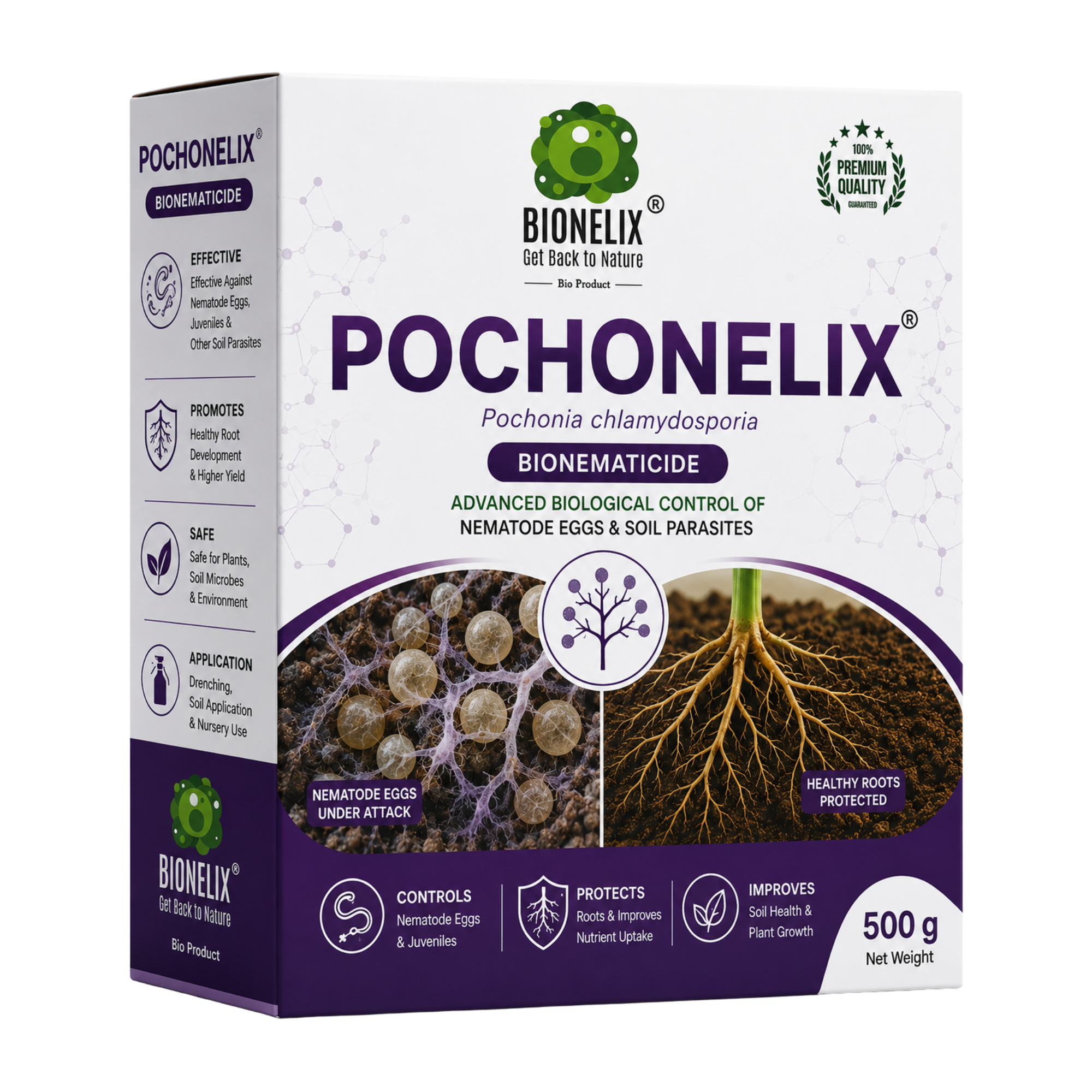
Pochonia chlamydosporia Based Bionematicide

Biological suppression of root-knot, cyst, and plant parasitic nematodes

Pochonelix® is a Pochonia chlamydosporia based bionematicide developed for effective biological control of plant parasitic nematodes in agricultural and horticultural crops. The fungus colonizes the rhizosphere and parasitizes nematode eggs, helping suppress nematode populations and protect crop roots from damage.

The formulation persists in soil and organic matter, providing longer-lasting biological nematode suppression while supporting healthier root systems and improved crop productivity.

Suitable Crops

Vegetables

Fruits

Plantation crops

Nursery crops

Flower crops

Horticultural crops

Organic farming systems

Target Nematodes

Root-knot nematodes (Meloidogyne spp.)

Cyst nematodes (Heterodera & Globodera spp.)

Lesion nematodes (Pratylenchus spp.)

Reniform nematodes (Rotylenchulus spp.)

Egg Infection & Parasitism

The fungal spores germinate near nematode eggs, penetrate the egg shell, invade the embryo, and consume internal nutrients, preventing egg hatching and reducing nematode populations.

Enzymatic Degradation

Pochonelix® produces enzymes such as proteases and chitinases that degrade nematode protective layers and facilitate fungal invasion.

Secondary Metabolite Activity

The fungus produces nematicidal metabolites that interfere with nematode physiology and support effective biological suppression.

Rhizosphere Colonization

The fungal strains establish around developing roots and help create a biologically active root zone unfavorable for nematode multiplication.

Parameter Specification
Product Type Pochonia chlamydosporia Based Bionematicide
Active Ingredient Pochonia chlamydosporia Spores
Formulation Wettable Powder (WP)
Concentration Minimum 2 × 10⁸ CFU/g
Recommended Dose 2–4 kg per acre
Mode of Action Egg parasitism & nematode suppression
Pack Size 1 kg

Benefit

  • Effective biological suppression of plant parasitic nematodes
  • Helps reduce root damage and crop yield losses
  • Supports healthier and stronger root systems
  • Suitable for organic and residue-free farming systems
  • Provides long-lasting suppression through soil persistence
  • Helps improve soil biological activity and nutrient cycling
  • Does not harm beneficial microorganisms or earthworms
  • Supports sustainable and integrated crop management systems
  • Helps reduce dependence on chemical nematicides
  • Reduces risk of resistance development in nematode populations

Soil Application

Apply 2–4 kg per acre mixed with FYM, compost, or organic matter before planting or during early crop establishment.

Containerized / Nursery Crops

Mix 10–20 g per cubic meter of growing media and distribute uniformly before planting.

Application Conditions

Best performance is obtained under moist soil conditions with temperatures around 20–30°C and soil pH between 5.5–7.5.

Integrated Management

Can be integrated with crop rotation, organic amendments, resistant crop varieties, and biological soil management programs for improved long-term nematode suppression.

Soil Health Practices

Use along with organic matter enrichment and balanced irrigation practices to support fungal establishment and healthier root-zone biological activity.