Nemanelix

Nemanelix

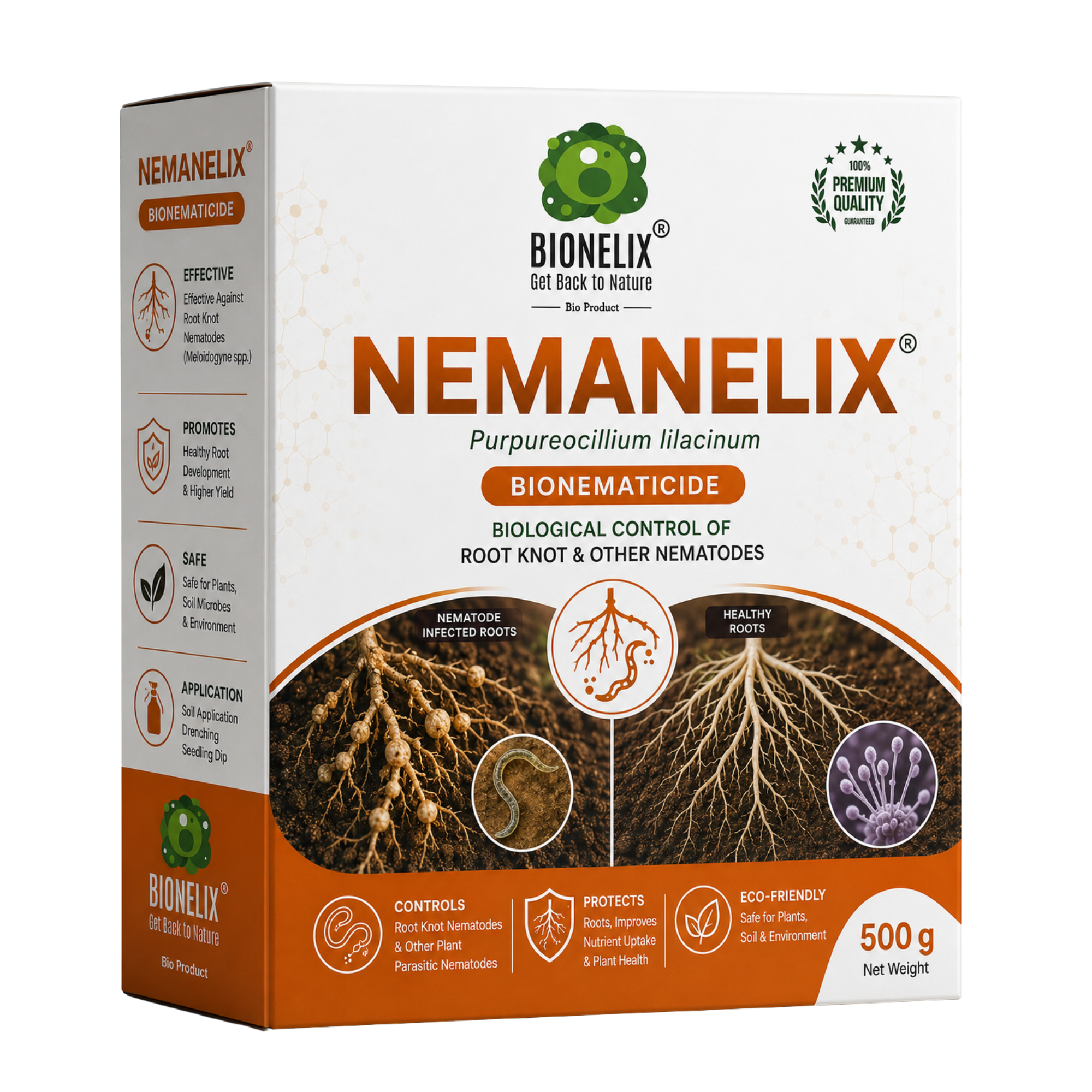
Purpureocillium lilacinum Based Bionematicide

Biological suppression of root-knot and plant parasitic nematodes

Nemanelix® is a Purpureocillium lilacinum (formerly Paecilomyces lilacinus) based bionematicide developed for effective biological management of plant parasitic nematodes. The fungus parasitizes nematode eggs, juveniles, and adult females, helping reduce nematode populations and protecting crops from root damage and yield loss.

The formulation colonizes the rhizosphere and root zone, where it suppresses nematode development and supports healthier root growth and improved crop performance.

Suitable Crops

Vegetables

Fruits

Plantation crops

Nursery crops

Flower crops

Horticultural crops

Organic farming systems

Target Nematodes

Root-knot nematodes

Cyst nematodes

Lesion nematodes

Burrowing nematodes

Ring nematodes

Egg Parasitism

The fungal hyphae surround nematode eggs and produce enzymes such as chitinases that break down the egg shell and inhibit egg hatching.

Nematode Infection

The fungus invades nematode eggs, juveniles, and adult females, replacing internal tissues and suppressing nematode development.

Enzymatic & Metabolite Activity

Nemanelix® produces fungal metabolites and exogenous enzymes that weaken nematodes and support biological suppression.

Rhizosphere Colonization

The fungus colonizes the root zone and helps create a biologically active rhizosphere unfavorable for nematode multiplication.

Parameter Specification
Product Type Purpureocillium lilacinum Based Bionematicide
Active Ingredient Purpureocillium lilacinum Spores
Formulation Liquid Formulation
Concentration Minimum 1 × 10⁸ CFU/mL
Recommended Dose 1–3 L per acre
Mode of Action Egg parasitism & nematode suppression
Pack Size 1000 mL

Benefit

  • Effective biological suppression of plant parasitic nematodes
  • Helps reduce root damage and yield loss
  • Supports stronger and healthier root systems
  • Improves crop growth and harvest quality
  • Suitable for organic and residue-free farming systems
  • Supports healthier rhizosphere biological activity
  • Can be applied during planting and post-planting stages
  • Helps reduce dependence on chemical nematicides
  • Compatible with sustainable and integrated crop management systems

Dose

Apply 1–3 L per acre during planting or early crop establishment for nematode management.

Season-Long Application

For continued nematode suppression, reapply 1–3 L per acre at approximately 28-day intervals during the cropping period.

Application Methods

Can be applied through:

  • Soil drenching
  • Drip irrigation
  • In-furrow application
  • Lay-by soil incorporation
  • Root-zone application during transplanting

Application Conditions

Best results are obtained under moist soil conditions with adequate organic matter for effective fungal establishment and rhizosphere colonization.