Metanelix

Metanelix

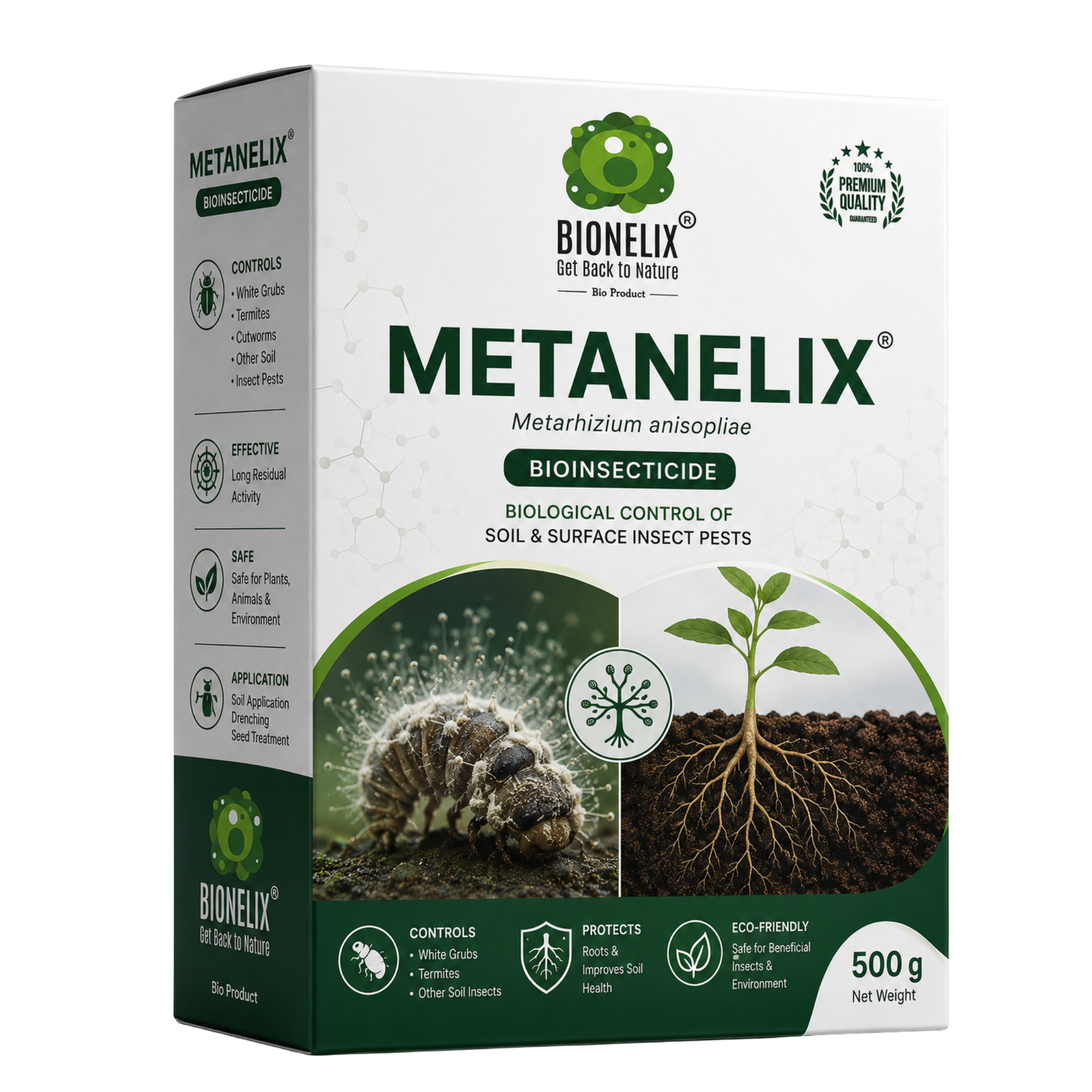
Metarhizium anisopliae Based Bioinsecticide

Broad-spectrum biological control for soil and surface insect pests

Metanelix® is a Metarhizium anisopliae-based entomopathogenic bioinsecticide developed for effective biological control of a wide range of soil and surface insect pests. Commonly known as green muscardine fungus, Metarhizium infects and kills insects naturally while supporting sustainable and residue-free pest management.

The fungus infects insect hosts through direct contact, penetrates the insect body, multiplies internally, and eventually causes mortality. The spores remain active in soil and organic matter, providing longer-lasting biological suppression and secondary spread among insect populations.

Suitable Crops

Vegetables

Fruits

Cereals

Plantation crops

Cotton

Sugarcane

Horticultural crops

Nursery crops

Organic farming systems

Target Pests

White grubs

Root weevils

Beetles

Cutworms

Wireworms


Thrips

Mole crickets

Termites

Ticks

Caterpillars

Direct Infection

The fungal conidia attach to the insect cuticle, germinate, and form specialized penetration structures that pierce the insect exoskeleton and enter the body cavity.

Internal Colonization

Once inside the insect, the fungus multiplies rapidly and spreads through the hemocoel, consuming internal tissues and depleting nutritional reserves.

Enzymatic & Metabolite Activity

Metanelix® produces hydrolytic enzymes and secondary metabolites that weaken insect defenses and support effective insect mortality.

Secondary Spread

After the insect dies, fungal growth emerges externally and produces new spores that spread naturally within the environment and infect additional insect hosts.

Long-Term Soil Activity

The fungal spores survive in soil, organic matter, and insect debris, supporting longer-lasting biological pest suppression.

Parameter Specification
Product Type Metarhizium anisopliae Based Bioinsecticide
Active Ingredient Metarhizium anisopliae Spores
Formulation Wettable Powder (WP)
Concentration Minimum 2 × 10⁸ CFU/g
Recommended Dose 2–4 kg per acre
Mode of Action Entomopathogenic fungal infection
Pack Size 1 kg

Benefit

  • Broad-spectrum biological control of soil and surface insect pests
  • Effective against multiple insect life stages
  • Long-lasting protection through soil persistence and secondary infection
  • Helps reduce dependence on chemical insecticides
  • Supports resistance management programs
  • No known insect resistance development
  • Suitable for organic and residue-free production systems
  • Improves plant health and crop productivity
  • Safe for sustainable and integrated pest management programs
  • No harvest waiting period

Foliar Application

Apply 1–2 g per litre of water during early pest population stages as foliar spray. For effective control, repeat applications at 5–10 day intervals under favorable environmental conditions.

Under heavy pest pressure, shorter application intervals (2–5 days) or initial knockdown treatment may be required for satisfactory control.

Seed Treatment

Dilute the formulation 100–200 times with water, mix thoroughly, and soak seeds for 4–6 hours before sowing.

Soil Application

Apply 2–4 kg per acre mixed with well-decomposed FYM or organic manure near the root zone for management of soil insect pests.

Drip / Soil Drench Application

Apply through drip irrigation or soil drenching during the latter half of irrigation when the soil is adequately moist for better fungal establishment.
Application Conditions

Best results are obtained under warm and humid conditions with adequate soil moisture for fungal germination, infection, and establishment.